
EN




Aluminum vs UPVC Windows: Which Is Better for Commercial Projects?
Oct. 23, 2026
Introduction
Window-frame material affects the appearance, energy efficiency, weather resistance, maintenance needs and lifetime cost of a building. Aluminum and unplasticized polyvinyl chloride (uPVC) are both widely used, but they have different material properties. Neither is automatically the best choice for every commercial project. Buyers should examine the building application and the performance of specific tested window systems.
Understanding Aluminum Windows
Aluminum windows use extruded metal profiles to create frames and sashes. Aluminum offers high stiffness relative to its weight and supports varied architectural configurations. It is used in offices, hotels, apartments and contemporary homes. Standard aluminum profiles are conductive; thermal break designs incorporate insulating elements to improve thermal performance. Profile geometry, glazing and hardware all influence final results.
Understanding uPVC Windows
uPVC windows use rigid plastic profiles, often with multiple chambers. The material itself conducts heat less readily than aluminum. Some larger units require reinforcement to meet structural demands. Quality depends on profile formulation, UV stabilization, reinforcement, fabrication and installation. uPVC is common in housing and may also suit selected commercial developments.
Structural and Design Considerations
Aluminum is often favored where designers want slender sightlines, large glazed areas or demanding structural configurations. uPVC can also meet structural requirements when appropriately designed, sized and reinforced. Do not infer allowable window dimensions from material names alone: wind load, mullion design, glass weight, connections and installation are critical.

Energy Efficiency
uPVC has an advantage in basic material conductivity, while thermally broken aluminum systems can achieve strong complete-window thermal performance. Compare certified or documented whole-window U-values and air leakage rather than isolated frame claims. In hot climates, solar heat gain coefficient and shading may be as important as insulation. In cold climates, conductive heat loss and condensation control often deserve more attention.
Durability and Maintenance
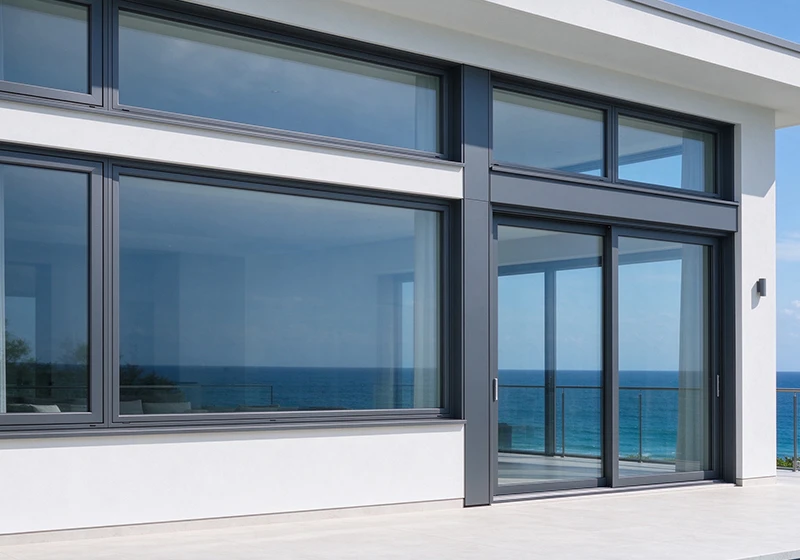
Both materials can perform for many years if suitable for the climate and properly maintained. Aluminum finishes such as powder coating and anodizing need to be selected for exposure conditions. Coastal projects require special attention to hardware corrosion and finish specification. uPVC generally needs little surface finishing, but quality and UV resistance influence long-term appearance. Routine inspection of seals, drainage and operating hardware is important for either option.
Costs and Procurement
Initial cost depends on profile system, glass, hardware, dimensions, order volume and destination market. Thermal break aluminum can cost more than standard aluminum. uPVC may be economical for many smaller projects. Commercial buyers should compare installed cost, energy implications, replacement parts, cleaning access and expected maintenance rather than simply comparing the price per unit.
Conclusion
Aluminum offers architectural flexibility and structural capability, while uPVC provides low material conductivity and can be cost-effective. For hotels and large commercial openings, thermally broken aluminum is often worth evaluating. Final selection should be based on project-specific performance, local regulations and lifecycle cost.
Practical Checklist for International Buyers
Before placing an order, prepare a written project brief that identifies the destination country, building type, opening dimensions, design wind loads, preferred glass construction, color, hardware requirements and installation method. Ask the supplier to confirm which technical performance figures refer to the full window and which refer only to individual components. Compare drawings and quotations on the same specification basis, including packaging, delivery terms and after-sales support. Request sample finishes and confirm that the proposed configuration can be manufactured consistently. For projects with special regulatory or environmental requirements, consult the responsible architect or engineer and verify the applicable local standards before approving production. This approach improves communication and makes technical comparisons more meaningful.

Previous:
None

Latest Knowledge
Get In Touch!
Accurately Match Needs and Create Exclusive Solutions Your Needs, Our Expertise